Category: Climate
-

Solar Geoengineering To Cool the Planet: Is It Worth the Risks?
Once considered a crazy idea, solar geothermal engineering is gaining acceptance in some circles. But it’s not without drawbacks.
-

A Virtual Reality Film That Makes the Climate Crisis Feel “Real”
‘Once a Glacier’ is about a girl who tries to save a glacier—and with it, forge new empathy for our fellow humans and planet.
-
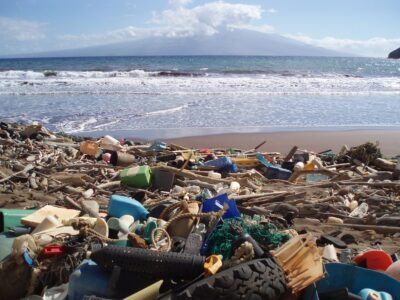
This Earth Day, Choose the Planet Over Plastics
In keeping with the theme of Earth Day 2024, how do we reduce global plastic pollution and ensure a more sustainable future?
-

Register to Present at the Climate School’s Earth Month and Student Research Showcase
Columbia’s annual Earth Month and Student Research Showcase will take place on April 26.
-

Key Ocean Current Contains a Warning on Climate
A new study shows that a giant current circling Antarctica has speeded up during past warm periods, eating away at the polar ice. It’s doing it again now.
-

Using Nature to Help the Climate: 4 Ways That Work
Only a few nature-based climate solutions are grounded in well-proven science. The good news: these are the ones that are already most widely used.
-

Catherine McKenna on Her Life, Work and Preserving the World for Future Generations
In a recent Climate School lecture, the former Canadian Minister of Environment and Climate Change spoke of her not-so-linear career path and why politics are pivotal in combatting climate change.
-

How Climate Change Drives the Spread of Invasive Plants
Abetted by warmer climes, non-native species can take root and wreak havoc in new environments. Is there anything we can do about them?
-

Stickiness in Glacial Space and Time
What role do ice and glacial melt play in modern society? Icelandic anthropologist Gísli Pálsson reflects on a recent article that examines this question.